Associate Professor of Digital Media, UC Irvine; Associate Director of the UCI Game Culture and Technology Lab; Director of Academic Computing for the Claire Trevor School of the Arts, UCI
Home page
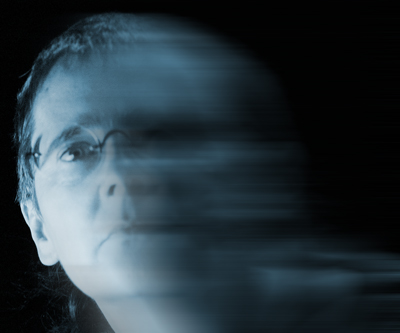 Antoinette LaFarge has a particular interest in constructed realities, including computer-mediated performance, net-based improvisation, online role-playing games, avatar performance, playable media, nonlinear narrative, fictive art, and geofiction. Recent mixed-reality and intermedia performance works include Demotic (2003/2006), The Roman Forum Project (2003), Reading Frankenstein (2003), Virtual Live (2002), and The Roman Forum (2000). She has co-curated two groundbreaking exhibitions on computer games and art: “ALT+CTRL: A Festival of Independent and Alternative Games” (2003) and “SHIFT-CTRL: Computers, Games, and Art” (2000) at UCI’s Beall Center for Art and Technology. She is the founder and artistic director of the Plaintext Players, a pioneering online Internet performance troupe that has appeared at numerous international venues, including the 1997 Venice Biennale and documenta X. She is also the founder and director of the Museum of Forgery, a virtual institution dedicated to opening up the cultural dialogue around forgery and related practices such as appropriation. She is associate editor of the anthology Searching for Sebald (2007), and her critical writing and fiction have appeared in several books, including Benjamin’s Blind Spot (2001). Recent publications include “Media Commedia” (Leonardo, 2005), “25 Propositions on the Art of Networlds” (Anthology of Art, 2002), and “Marcel Duchamp and the Museum of Forgery” (Tout-Fait: The Marcel Duchamp Studies Online Journal, 2002). From 1995 to 1998 she served as Guest Editor of the annual Digital Salon issue of Leonardo.
Links: Home page | Roman Forum Project | ALT+CTRL | UCI Game Culture & Technology Lab
Quote:
Interactive work calls into existence an I who makes things happen. It is not so much that digital modes exclude the physical body as that they require a constant negotiation of the relationship between the real and imaginal selves.