UC New Media Research Directory
Lewak, Sue
April 6th, 2007 under Grad Students, Uncategorized

Graduate Student, English Dept., UCLA
Home page

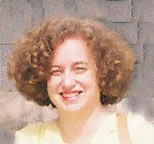
Sue LewakSue Lewak is a doctoral student in the department of English at UCLA and is working on a dissertation entitled A Laptop of One’s Own. Her research interests include 20th and 21st century American literature, the South Asian Diaspora, digital culture, networked societies, and science fiction. She was an Instructional Technology Consultant (ITC) for the Center for Digital Humanities, UCLA from 2005-2007. She also has a background in wikis, social networks, desktop publishing, and web development.

 Links:      Home page

 Quote:   
Questions that correlate the nature of authorship with the materiality of writing machines are not new to either literary criticism or to New Media scholarship. However, the environment of Web 2.0, (c. 2003-present) must, by its very nature, develop and expand these questions. If the “death of the author” led to “the birth of the reader” (in an environment where information was primarily linear and controlled by publishing companies), and the electronically-based “hypertext author” raised new possibilities for multi-linear writing (beyond print-based works such as Joyce’s Ulysses), what then are the implications of environments constructed entirely by web-based, social networking applications? As never before, we can now turn to Foucault and ask, “What matter who’s speaking?

What Matter Who’s Speaking: Access, Wikis, and YOU” on the companion website to Electronic Literature: New Horizons for the Literary.


Search
New on the Site
Recent Commentors
Random Quote/Image
To explain this more precisely, just as Bloom acknowledges in Omens of Millennium that the very prescience of the Gnostic texts would not have allowed them to disappear entirely (and for their persistence, it must be noted, he is joyful), the prescience of Frankenstein similarly renders it a dangerous text to be used and/or abused. Frankenstein’s prescience resides in Mary Shelley’s brilliant dialectic of reality-based faith and scientific dreams. Simultaneously, this dialectic demands attention and theorization and it denies the possibility of polemical resolution. Thus, Shelley astonishingly narrates a meta-prognostication on the formula of science fiction as the imaginative production which can lead to reproductions inside and outside of texts even as she is installing the spark of life into the first of its species. From this critical perspective, even the most conservative efforts to ossify Frankenstein into a technophobic cultural cliché will, like Victor’s pastoral optimism in trying to forget about the creature amidst the sublime Alpine landscape, not succeed in bringing forth the good spirits (whether God or a sacred “Nature”) they summon. Rather, every cautionary invocation of Frankenstein cannot help but give more life, as both Harold Bloom and that rebellious replicant Roy Baty are both fond of saying, to precisely the abhorrent productions and reproductions they desperately wish to kill.
From “Dismembering the Cautionary Cliché: Re-reading the Warnings in Mary Shelley’s Frankenstein”
Admin