Graduate Student, School of Education, UC Santa Barbara
Home page
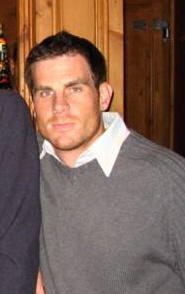 James Ford is a doctoral student in education at UCSB. His general research interests are in writing studies, rhetoric, and technical communication. More specifically, he is interested in the way technology (namely augmented reality systems) impacts literacy practices, not only in educational settings, but in the workplace, and in common societal practices such as in political campaigns, tourism, and entertainment. His background is in technical communication and writing studies. He received his master’s degree in technical communication from Texas Tech University and began his studies at UCSB in 2004.
Currently, James is working with fellow Transliteracies Research Assistant Marc Breisinger on LEMMA. Along with researching applications of this technology in education, research is also being conducted in an attempt to better understand how users of enhanced reality environments represent their conceptual understanding of the abstract in 2D.
Links: 4 Eyes Lab | Learning Environment with Multi-Media Augmentation | School of Education, UCSB | jameskford.com
Quote:
[Under Construction]
— Citation
